

Offshore hiring often starts with a simple expectation. Hire talent in another country. Reduce costs. Get the same output.
Sometimes that happens. Often it does not.
When offshore hiring fails, the first conclusion is usually that the talent was the problem. In reality, most failures come from how the work was structured, managed, and supported. The talent market offshore is not the weak point. The system around it usually is.
This post walks through the most common reasons offshore hiring breaks down. It explains where things go wrong and what decision makers often miss when they decide offshore “doesn’t work.”
What they mean when they say offshore hiring failed

Founders or business owners rarely describe failure the same way. Some say deadlines were missed. Some say quality was inconsistent. Some say communication felt heavy. Some say they spent more time managing than expected.
If roles are vague, offshore work exposes that. If ownership is fuzzy, offshore work makes it visible. If processes live only in someone’s head, offshore work breaks them.
That is why offshore hiring feels unpredictable. It is not random. It is reactive to the system it is placed in.
The first mistake happens before anyone is hired
Outsourcing vendors
Dedicated offshore teams
Freelancers or contractors
Direct hires supported by an employer-of-record
These hiring models behave very differently. They require different levels of involvement. They carry different risks. Problems start when a founder expects one model but buys another.
For example, a founder hires an outsourcing vendor and expects the output to feel like an internal team. The vendor, however, is optimized to deliver tasks efficiently, not to build deep context or long-term ownership.
That mismatch creates friction immediately. The founder feels disappointed. The vendor feels mismanaged. Both sides blame execution when the real issue is the structure.
The difference between outsourcing, offshoring, and direct hiring is often glossed over, even though each model behaves very differently in practice, as explained in our breakdown of outsourcing vs offshoring and how to choose the right model.
Why vendor-led offshore hiring breaks down
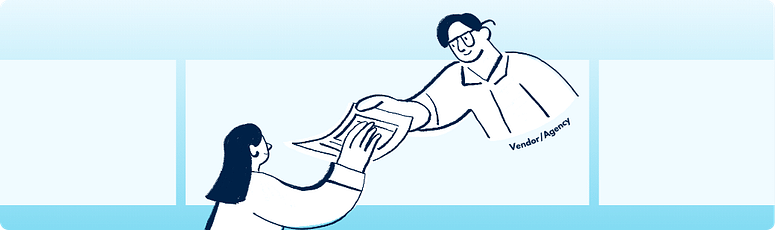
When a company hires through a vendor or agency, the incentives are not the same on both sides. The vendor earns money by keeping people billable, controlling costs, and protecting their margins. The founder, on the other hand, is paying for work that holds up over time. They want quality decisions, consistent output, and fewer problems six months down the line.
That difference shapes everything that happens next.
During sales conversations, founders usually meet senior people. These are experienced developers, project managers, or solution leads who understand the business well and communicate clearly. They help define the scope, answer hard questions, and build confidence.
Once the contract is signed, those people often step away. The day-to-day work is handed to more junior staff who were not part of the original conversations and do not carry the same context.
From the founder’s point of view, it feels like a quiet handoff. From the vendor’s point of view, it is normal operations. Senior people are expensive, so they are moved to the next deal. Junior staff are cheaper, so they are assigned to delivery.
This handoff is one of the reasons we documented our own hiring and screening process in detail, because dedicated teams behave very differently when the people doing the work are hired specifically for the role and stay accountable long-term, as outlined in Inside LevelUp’s recruitment process.
Day-to-day delivery
For example, a developer might hard-code something because it is faster and meets the immediate requirement. The feature works today, but it becomes painful to change later. From the vendor’s perspective, the task is complete. From the founder’s perspective, the product just became harder to scale.
None of this requires bad intent. Most vendors are doing exactly what their model encourages them to do. They are set up to move work through the system efficiently.
This approach can work well for short, contained tasks. Things like migrating content, building a one-off landing page, or handling overflow support tickets are usually fine. The work has a clear start and end, and the risk of long-term damage is low.
It becomes a problem when the role is central to the business. Product development, ongoing marketing execution, or customer support processes need people who understand context, make judgment calls, and care about downstream impact. Those roles require accountability over time.
In practice, this is why some teams move away from vendor-led outsourcing toward dedicated hires supported by an Employer of Record. The work stays inside the business, while compliance, payroll, and local employment risks are handled separately. The difference is not cosmetic. It changes who owns decisions and how feedback flows.
Hourly rates vs personal time

When most people think about offshore hiring, they almost always start with the hourly rate. That makes sense. It is the most visible number, and it is easy to compare. But the amount of personal time it takes to make offshore work run smoothly is not usually factored in.
Distance changes how work moves. Offshore work needs more explanation than most decision makers expect at the beginning. Instructions that feel obvious in your head need to be written down properly. Decisions that you would normally make on the fly have to be spelled out.
You start adding screenshots, longer messages, and follow-ups just to make sure everyone is aligned.
Teams that see this cost early usually respond by investing more upfront. Clear role definitions and proper onboarding. These steps feel heavier at the beginning, but they reduce the constant back-and-forth that makes offshore work exhausting.
This gap between hourly rate and real operating cost shows up clearly when teams compare numbers upfront, which is why we always frame offshore costs in terms of total ownership rather than just rates, similar to how we break it down in Virtual Assistant cost in 2026.
Why cheap offshore talent creates more work
The problem usually does not start with skill. It starts with expectations.
One example comes from a health and wellness brand that hired a social media manager at five dollars an hour through an online platform. On paper, the role looked simple. Posting content. Engaging with comments. Supporting course launches.
In practice, the founder spent hours each week rewriting captions, correcting basic mistakes, and explaining what should have been obvious for the role. The person was active but not effective. Every post needed approval. Every campaign needed step-by-step direction.
The low hourly rate only worked because the founder absorbed the planning, quality control, and decision-making themselves.
Another case involved an agency that tried offshore video support through a low-cost provider. The promise was speed and coverage. What actually happened was constant coordination.
Time was lost explaining tasks repeatedly because the team did not understand the client’s audience or priorities. Deadlines slipped because instructions were interpreted too literally.
The agency eventually walked away, not because the team was incapable, but because managing the work took more time than doing it in-house.
There are also examples from agencies that tried hiring junior offshore talent to save money, assuming the role would “grow into” the work.
One agency hired a community coordinator offshore at a lower rate, expecting them to manage conversations, moderate groups, and represent the brand confidently. What they found instead was that every response needed review.
Escalations were missed and tone issues created risk with clients. The agency realized they were paying less per hour but spending more senior time supervising the role than they could justify.
The same problem at a bigger scale
In larger setups, the cost shows up differently. A company that previously worked with large outsourcing firms experienced high attrition and repeated training cycles. New hires came in with basic qualifications but lacked the background needed for the role.
Each time someone left, the process restarted. Knowledge was lost. Momentum stalled. The lower cost per hire did not matter once training time, errors, and rework were added back in.
Across these situations, the pattern is the same. Lower-cost hires require more structure, more guidance, and more review. That is true anywhere, but distance makes it heavier.
Cheap offshore talent is not automatically bad talent.
The issue is hiring at a junior level without adjusting the operating model. When the role needs judgment, prioritization, or independent decision-making, the extra support required can quietly erase the savings.
What people describe as a talent problem is often a mismatch between the role, the level hired, and the support provided.
This is why some teams walk away saying offshore hiring “did not work,” when what actually failed was the assumption that low cost could replace experience without changing how the work was managed.
The communication trap

Communication problems in offshore setups rarely come from poor English or lack of effort. They come from how questions are asked and how answers are understood.
In many vendor-led or hierarchical environments, saying “yes” does not always mean agreement or confidence. It often means acknowledgment. The person heard the request and wants to be respectful. They are not always signaling that the task is feasible as described.
This creates a familiar pattern. A manager asks whether something can be done by a certain date. The answer sounds positive. No risks are raised. Everyone moves on. When the deadline arrives, the work is late or incomplete.
From the outside, it feels like overpromising. From the other side, it often feels like the expectation was never fully discussed.
The breakdown usually happens before the work even starts. Questions that only allow yes or no answers hide uncertainty. People who are unsure do not always feel comfortable pushing back, especially when they are new, offshore, or working through a vendor.
Conversations work better when they invite explanation. Asking someone to walk through how they plan to approach a task surfaces gaps early. Asking what might block progress gives permission to raise issues before they turn into delays. These small shifts change the quality of information shared, not just the tone.
Clear communication in distributed teams is not automatic. It has to be practiced deliberately. When teams adjust how they ask questions, problems surface earlier and trust becomes easier to maintain.
Attrition and continuity issues
Turnover is common in offshore environments, especially when agencies are involved. People move in and out more often than many teams expect, and each change quietly resets progress.
When someone leaves, the loss is not limited to unfinished tasks. Context goes with them. Decisions made months earlier, reasons behind certain trade-offs, and knowledge of what already failed often live in people’s heads, not in documentation. The next person starts without that history, even if their résumé looks strong.
From the business side, this shows up as instability. Work never quite compounds. Momentum builds, then drops, then has to be rebuilt again. From the team side, frequent turnover often signals that the role is transactional.
If people feel interchangeable, they behave that way. They focus on completing tasks rather than investing in long-term outcomes.
This pattern shows up clearly in larger outsourcing setups. Companies that cycle through offshore staff end up retraining repeatedly. New hires need time to understand the product, the customer, and the workflow.
Before they fully ramp up, someone else leaves. The cost of lower hourly rates disappears once training time, mistakes, and lost continuity are added back in.
Remote employee retention improves when people feel part of something stable. That usually comes from inclusion in conversations, clear expectations, and roles that match the level of responsibility required. When those elements are missing, turnover becomes part of the operating cost, even if it is not listed on any invoice.
How to prevent offshore hiring from failing

Start with the right hiring model
Most offshore hiring failures do not come from bad luck. They come from missing fundamentals. When those basics are in place, the setup is usually stable. When they are missing, even good people struggle.
The first decision that matters is the hiring model. A vendor-led setup, a direct hire through an Employer of Record, and a contractor arrangement all behave differently.
Define the role and assign clear ownership
Role clarity matters more than most teams expect. Offshore hires rely heavily on written context. Vague job descriptions lead to vague output. Clear responsibilities make it easier for people to make the right decisions without constant checking.
Internal ownership is another common gap. Someone inside the business needs to be responsible for outcomes. That person reviews work, answers questions, and sets priorities. Without a clear owner, offshore teams wait. Small issues turn into delays because no one feels authorized to move things forward.
Invest properly in onboarding
Onboarding deserves more attention than it usually gets. Giving access to tools and tasks is not enough. People need to understand how the business works, why certain decisions were made, and what good output looks like. When onboarding is rushed, the team spends days or even months correcting avoidable mistakes.
Create overlap and shorten feedback loops
Time zone overlap helps reduce friction. Even a few shared hours make a difference. Real-time conversations shorten feedback loops and prevent small misunderstandings from turning into day-long delays. When there is no overlap at all, communication becomes slower and more formal than it needs to be.
Work also needs to be reviewed early and regularly. Waiting until the end of a sprint or project to check progress increases the cost of mistakes. Early reviews keep expectations aligned and reduce rework. Over time, this builds trust on both sides.
Manage by output, not activity
Managing by output rather than activity is what keeps the relationship healthy. The focus stays on whether work is clear, correct, and delivered as agreed. Surveillance and micromanagement tend to backfire. Clear goals and regular feedback work better.
None of these steps are complex. They reflect basic operating discipline. When teams apply them consistently, offshore hiring becomes easier to manage and more predictable. When they are ignored, offshore hiring does not create efficiency. It magnifies existing problems.
This is the approach we use at LevelUp when building offshore teams for long-term roles.
What good offshore structure looks like in practice

What a solid offshore setup looks like:
Clear role scope
Proper onboarding
Clear point of contact
Planned overlap hours
Communication rules
Regular reviews
Output-based management
Transparent costs
EOR employment
Payroll and benefits
HR and legal compliance
Long-term retention
Ongoing support
With the right offshore setup, distance becomes manageable.

