


I am Katinca Tapia, HR Director at LevelUp, and I have been part of the team for two years. My work covers people, policies, and compliance with local labor regulations. I believe that when people feel treated with respect, they do better at work.
Remote employee retention has become a challenge across industries. Many companies struggle to keep people engaged and aligned in distributed setups.
Some try to fix this with strict rules or rigid structures. Others try to solve it with policies that look good on paper but do not match how people actually work.
At LevelUp, we took a different approach, which shaped the HR structure and helped remote employees feel connected to the company even without a physical office.
How HR Started at LevelUp
When I joined LevelUp, the company had around seventy to eighty people and did not have a formal HR department. From Day 1, our founders took care of our people. They listened to concerns and handled issues early. They created a culture of openness and trust.
My role has been to formalize practices and processes and keep the environment supportive as the team grows.
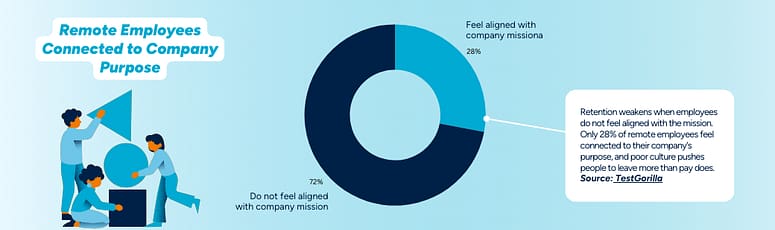
Retention weakens when employees do not feel aligned with the mission. Only 28% of remote employees feel connected to their company’s purpose, and poor culture pushes people to leave more than pay does.
The HR structure we built helps stop that from happening. People know exactly where to go when they need help. Team leads are less stressed because everything comes through one place. Team members feel safer because HR handles things steadily and consistently.
Supporting People Through Structures That Make Work Easier
A strong HR structure is one of the most reliable ways to improve remote employee retention.
People work to earn a living, and many of our team members are already good at what they do. I do not want to add tasks or admin work just because “that is how the industry does it.”
We put a lot of thought into the way we work so our people can focus on their jobs while the HR and admin tasks stay in the background. When people feel treated as people, they bring better versions of themselves to work.
A lot of this comes from leadership. Our founders empower people and show trust. They give everyone a voice.

The trust we have in our people shaped how our structure works today. As the team grew, I noticed that people needed steady support because remote work can feel quiet at times.
We looked at the parts of work where people usually require help and made sure support is always there.
Clear Role Expectations
Clear expectations matter in remote work because people want to understand what they should focus on. When responsibilities are unclear, small misunderstandings grow. It affects performance and how secure someone feels in their role.
Structured onboarding and steady check-ins help people ask questions and hear what their managers expect from them. That guidance supports remote employee retention because employees feel more secure in their direction.
When they understand their role, they move with more confidence.
Development Conversations
Quarterly conversations help us understand how someone is doing. They give time to talk through progress, challenges, and support needs.
Our team leads take these conversations seriously. They use them to understand workload and performance. HR is there to support both sides during these talks.
I do not believe in giving up on people quickly. Many only need direction. Remote work can feel quiet. Some feel unnoticed. Regular conversations help them feel seen.
For founders, consistent attention to growth is one of the simplest ways to keep people engaged. Employees stay longer when they know someone is paying attention.
Our recruitment team has done a great job bringing the right people in. We want to take care of them and see them grow with us because we believe in the talent we hire.
Wellness Programs
Before we introduced any wellness program, we analyzed feedback from HR surveys, as well as data from exit interviews, admin cases, and attendance.
The most common theme pertained to physical and mental wellness.
To help employees take better care of themselves so they can thrive professionally and personally, we embarked on Thrive on Thursday. The goal was to provide employees access to resources that will develop good habits and provide support, so they can thrive.
One session focused on breathwork. It was led by our Marketing Director, Leoni Parkinson, who is also a trained breathwork coach. It showed how support can come from within the team.
People appreciated learning a simple practice that helped them feel calmer and more centered during the workweek.
We also held a session on self-reflection guided by our Operations Director, Chris Winfield-Blum. The goal was to help people build a small habit of checking in with themselves. When people take a moment to reflect, they understand their reactions better and make clearer decisions.
He recommended simple practices like journaling or using a digital tool to track thoughts. A few minutes in the morning with a notebook or a quick digital check-in can help people stay more aware of how they feel and what they need.
These small habits support better decision-making and create more stability in a remote setup.
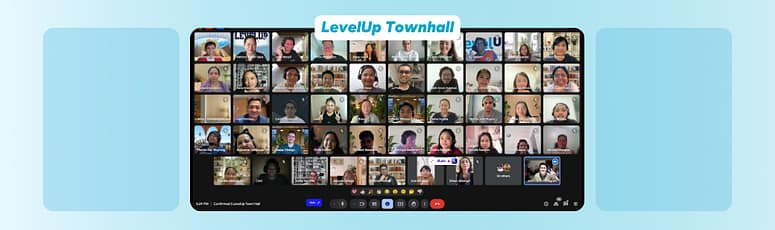
We also host our quarterly online town hall, which helps foster camaraderie and build connections in our remote work environment.
Remote teams do not have casual hallway conversations. They need intentional spaces to meet others, hear updates, and celebrate wins. This becomes even more important when companies use outsourcing and offshoring models, where structure guides alignment.
A Culture Built on Openness and Growth
LevelUp has an open environment where people can speak to leadership directly. Employees share ideas, suggest improvements, and raise concerns without needing to go through layers. Openness makes it easier for people to stay engaged because they feel heard.
Our core values reflect that mindset.
"We solve problems. We sweat the small stuff. We are better today than yesterday. We step up to the plate. We do the right thing."
One of the reminders tied to our values is simple. What would you do if your mum was watching? That line stayed with me because it captures how we expect people to behave. It sets the tone for the whole company.
In many workplaces, core values end up as a dusty poster that no one looks at. They sit in the background and rarely shape how people work.
At LevelUp, it is the opposite. The values show up in real conversations and decisions. We refer to them when we solve problems or ask for help. They guide how teams work together every day.
Growth also happens naturally because the environment encourages it.
Some team members started in technical roles and now hold internal leadership positions. They had ideas, shared them, and were supported as they took on more responsibility.
When people see a path forward, they tend to stay. Remote employee retention becomes stronger when growth feels possible.
Open Communication
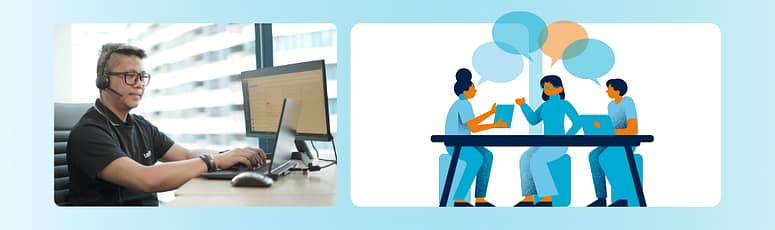
Our clients share this mindset. Many of them go out of their way to understand what works in the Philippines. They ask what is allowed, including questions like whether someone can work on a holiday.
That level of care shows up often. People want to make sure they do not make any mistakes with our rules.
Some clients are very conscious of workload. When they see someone online beyond their shift, they reach out and ask why. They want to check if the work is too much. It is generous and thoughtful, and it shows that they want to treat people like people.
Open communication makes all of this easier. Problems rarely grow when people talk early, and it is something we continue to work on because we know how important it is.
How We LevelUp
The anchor of our remote employee retention is our values-led culture. Team members appreciate it when we highlight and reward people who bring our values to life.
We hear this in individual conversations, and we heard it again during a recent roundtable discussion with our team leads. Recognition encourages people to keep showing up in the right way. It strengthens the culture we have been protecting since the beginning.
Founders often ask what makes remote teams stay. For me, it comes down to the environment we build each day.
People stay when they feel supported. They stay when expectations are clear. They stay when leaders listen and follow through. They stay when the culture is lived and not just written.
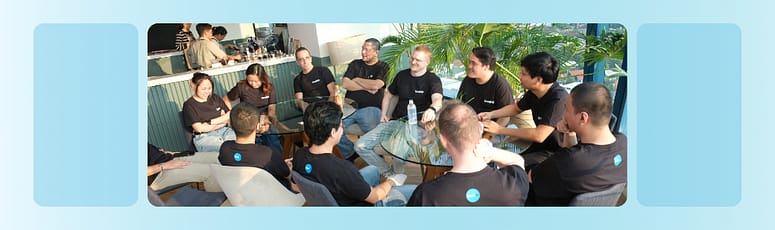
That is how we keep our teams engaged.
That is how we LevelUp.

