

My name is John Carlo Pattaguan. I am the IT Operations Administrator at LevelUp. When people ask what I do, the simple answer is this. I help our team internally with their IT needs.
I joined LevelUp in October 2017. The company had around five people then, with no polished structure or long org charts. There was work to be done and people who needed to rely on each other.
How I Almost Did Not Join LevelUp
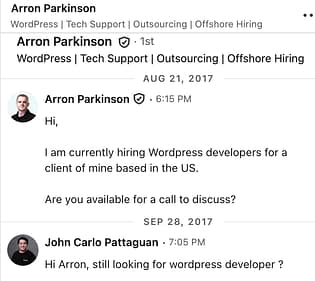
Aaron reached out to me around August 2017. He invited me to apply for WordPress technical support. I declined at first.
At that time, I was planning to work outside the Philippines. I also filed for an auto loan. Uber and Grab were booming then, and it felt like an easy way to support my family.
When the auto loan was approved, the government halted the registration for Public Utility Vehicle applications.

Technically, the car was not used for Grab for two years, yet I still had to continue paying the loan.
I covered the payments through various sources of income, including freelance work and other passive income opportunities.
This situation pushed me to explore and prepare for potential work opportunities outside the Philippines, although I continued working as a freelancer locally.
After about a month, I looked for Aaron on LinkedIn. I asked if the application was still open. It was.
The first time I met him was in Makati. I noticed we were only five people. He introduced the company to me and shared the history. It was a one-day process. I got hired after the first meeting.
Trust over Titles
I started in 2017 as a technical support specialist. At that point, the focus was simple. Do the work properly and support the people around me.
As the company grew, my role evolved significantly. I transitioned from WordPress technical support into a senior support position, where I began leading team members and contributing to operational decisions beyond ticket handling.
I later moved into the operations team, taking responsibility for managing the 24/7 service. As my responsibilities became more specialized, this progression eventually led me into IT Operations.
Looking back, what stands out is not role titles. What stands out is how trust was built over time. Each change happened because there was confidence that I could take on more responsibility, not because I was aiming for a particular position.
That idea was not new to me when I joined LevelUp. Before that, I was freelancing and running my own website. On my about page, I wrote about trust.
In WordPress technical support, there are many skilled people. There will always be experts who know more. What I believed I could offer was reliability and trust.
The same mindset carried into my work at LevelUp. Trust and initiative gave me confidence in what I was doing, and that confidence grew as I listened more closely, learned from the people around me, and applied their feedback in my day to day work.
Learning Through Listening and Feedback
I grew at LevelUp because of how feedback was given.

Learning from Team Leads
When I became a senior support team member, most of my learning came from working closely with my team lead at the time, June, and with our boss. They were involved and gave guidance regularly.
Feedback was not only given when something went wrong. It was part of how we worked. The purpose was clear. It was meant to help me improve.
Weekly feedback as part of the work
Weekly feedback became something I learned to value. It often pointed out areas where I could do better. Over time, it stopped feeling discouraging.
I also changed how I looked at feedback. Instead of focusing on what went wrong, I focused on what I could learn from it and how to make better decisions.
That shift helped me see things more clearly and approach my work with more confidence.
Work-Life Balance and Taking on More Responsibility

Becoming a team lead was never part of the plan.
At that point, the responsibilities already in place provided what mattered most. Work-life balance was important, and the role allowed space for it.
Outside work, time was spent on photography and church ministry. My personal commitments mattered, and keeping room for them was part of staying grounded.
When additional responsibility was introduced, fear came first. There was concern about making mistakes and about what would happen if something went wrong. Support was asked for early, in the same way one-to-one conversations had worked before.
One of the more memorable outcomes during this period was the chance to travel outside the Philippines.
In some cases, the company provided financial assistance. It was not framed as incentives, but as practical support connected to community involvement and volunteer work, including WordPress.
The experience reinforced something important. Work-life balance was not just talked about. It was practiced, and it was experienced firsthand.
Working for Clients Versus Working Internally
Over the years, my work has moved between supporting clients directly and working on the internal side of the business. Experiencing both made the difference between those two kinds of work very clear.
Client work and clear metrics
When I was working in technical support for clients, the focus was very direct and very measurable. The main goal was to hit specific targets, such as replies per support hour, while still maintaining quality.
Speed was important, but it was never about rushing. Communication remained clear at all times. That made it easier to respond calmly, even during busy periods.
The intention was always to support customers properly, not to make them feel pushed or overlooked.
Client-facing work shaped how I approached each day. Managing time mattered because the volume was constant.
Clear communication was important because misunderstandings created more work later. And staying focused on what the customer actually needed in that moment was the most significant of all.
The responsibility was to meet the numbers without sacrificing the quality of support or the experience for the person on the other side.
Internal work and process thinking
Moving into internal operations shifted my focus in a noticeable way. Instead of concentrating on fixing what was already broken, the work became more about understanding why issues were happening at all.
The questions changed. What caused this issue? What is the current process? Is there already a system in place that should have prevented it?
Internal work means you do not stop at fixing what is broken right now. You look for the reason it keeps breaking. The responsibility was not just to resolve an issue once, but to make sure it did not keep returning.
You review processes, workflows, and how teams work together. When those systems became clearer, problems were easier to prevent rather than repeatedly fix.
Client work is more direct. You complete tasks and meet specific goals. Internal work focuses on patterns and long-term improvement. Both matter, but they require different responsibility and thinking.
Offshore Team Members as Long-Term Partners

One thing I wish more clients understood about offshore team members is that we are not just support.
When you work offshore for a client, it is easy to be seen only as someone who responds to tasks. That is not how it feels when trust is built over time. What many offshore team members want is to be long-term partners.
For me, long-term partnership means caring about the company’s success. That understanding came from staying with LevelUp over time. I joined in 2017, and I have seen how the company has grown since then.
As the company grew, my own role changed as well. I moved from technical support to more senior responsibilities and later into IT operations.
The experience made it clear that offshore team members can contribute beyond day to day support. The work can include improving systems, shaping processes, and helping things run better for both clients and teams.
That kind of involvement only happens when communication and trust are there. When those are present, offshore team members are not just responding to tasks. They care about the business and want to be part of its growth.
Adaptability as a Daily Practice
For me, adaptability is one of LevelUp’s strengths because it is something we live every day, especially in the earlier years, when a lot of things were still being built as we went along.
Building systems

At that time, the company was running managed WordPress support. That was the core service then. I was part of the 24/7 support work, and that service did not yet have a clear support structure or a defined operations system.
A lot of the work involved figuring things out in real time. I spent time creating and improving the 24/7 support operation processes so the service could run more smoothly.
Meanwhile, leadership was focused on developing systems across the business. Other team leaders were spending more time on Build Your Own Team because inquiries for that service were increasing.
Client demand started to shift. More companies were asking for dedicated team members instead of shared support. Because of this, the company needed to focus on hiring more people for that service.
The team decided to pause growth of the 24/7 service so they could focus on what mattered most at the time, which was Build Your Own Team.
This is how adaptability showed up in practice. Priorities shifted based on demand. The team adjusted instead of trying to push everything forward at the same time.
The same approach is still used today. Client needs are listened to closely. Different options are considered. Solutions are prepared based on what fits the situation.
Making things work
There were also very practical moments that showed how adaptability worked day to day.
I remember delivering laptops to a shipping company when a new team member needed to start immediately. The operations team called and said one more laptop had to go out that same day.
I called my mom and asked her to help prepare the laptop. I went back, completed the setup, and shipped it again.
It meant going back and forth that day, but the priority was making sure the team member could start on time. In the end, we made it work.
Life at LevelUp Eight Years in
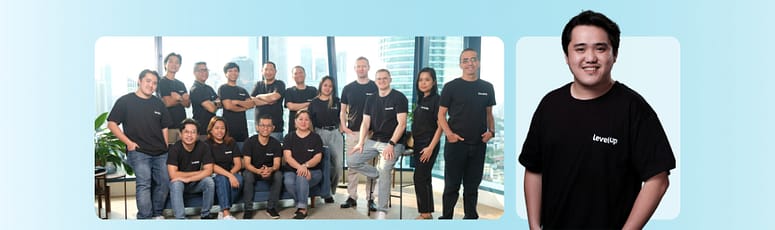
After eight years at LevelUp, what still stands out is the people.
When the team was very small, there were only a few of us. Everyone is supportive, approachable, and willing to help.
The environment makes it easier to do the work and to try new things. There is a sense that support is there when questions come up. That makes a difference over time.
There is also freedom to grow in a practical way. My work involves collaborating with different departments, not just IT. When something is needed, I look at what is possible, review it, and support where I can. Feedback is part of that process.
Because of this, the work does not feel like just a job. It feels like being part of a team that grows together. Work-life balance is something LevelUp really promotes, and that has been true throughout the years. That balance is a big reason I am still here.