Hire Offshore Software Developers in the Philippines

Dedicated software developers who work within your tech stack, development workflows, and existing engineering team.

30-day service fee refund. No long-term contracts

Role

Home > IT & Software Development > Software Developer

Software Developer: Key Skills

Programming & Framework Knowledge Works with the programming languages, frameworks, libraries, and development tools required by the company's existing tech stack.
Software Design and Architecture Understands application structure, system design, APIs, databases, integrations, and other technical decisions that affect scalability.
Debugging & Problem-Solving Investigates bugs, unexpected behavior, performance issues, 
Testing & Code Quality Writes maintainable code, uses appropriate testing practices, and checks changes before they move through review and deployment.
Development Workflows Works within Git-based workflows, code reviews, issue tracking, CI/CD processes, and the team's established development practices.
Adaptability to Emerging Trends Quickly learns and applies new tools, technologies, and frameworks to stay ahead in the field.

Key Responsibilities of a Software Developer

  • Develop and maintain software: Build new features, applications, services, and functionality based on product requirements and technical specifications.
  • Write maintainable code: Produce code that follows the team's standards and can be reviewed, tested, maintained, and extended by other developers.
  • Debug software issues: Investigate bugs, errors, performance problems, and unexpected application behavior and implement appropriate fixes.
  • Test code and functionality: Write and run relevant tests to verify changes and reduce issues before deployment.
  • Participate in code reviews: Review code, respond to feedback, and contribute to consistent development and quality standards across the team.
  • Work within the existing tech stack: Use the languages, frameworks, databases, APIs, cloud services, and development tools required by the product.
  • Collaborate on product development: Work with engineering, product, design, QA, and other stakeholders to clarify requirements and deliver planned work.
  • Maintain technical documentation: Document important code, systems, integrations, development decisions, and processes where needed.

Not quite what you're looking for?

These roles are similar to
a Software Developer
and might be a better fit for your needs

Save up to 67% Compared to hiring a Software Developer locally

67% Cost savings!
$7,500
$5,100
$4,700
$2,500

That's a cost saving of up to $60,000 per year

Home > IT & Software Development > Software Developer

Hiring an Offshore Software Developer: Defining the Role

Team member working at a computer with multiple screens in an office

Software development covers a wide range of work. You could be hiring someone to maintain an existing application, build new features, work on a mobile product, or support development across several client projects.

The role you need will depend partly on what you're building and the technology you use. From there, you can work out which type of developer and level of experience make sense for the work.

What Kind of Software Developer Do You Need?

Frontend, backend, full-stack, and mobile developers work on different parts of a product, so the distinction matters when you're hiring.

Developer Type

Main Focus

When They May Be a Good Fit

Frontend Developer

User interfaces and frontend applications

You need someone working mainly on the user-facing side of your product

Backend Developer

APIs, databases, application logic, and server-side systems

Most of the work is on the backend

Full-Stack Developer

Frontend and backend development

The role includes regular work across both

Mobile Developer

iOS, Android, or cross-platform applications

You're building or maintaining a mobile app

Stack-Specific Developer

Particular languages, frameworks, or systems

The role requires strong experience with a particular technology

Job titles can still cover different levels of experience. Check the candidate's previous work against what they'll be responsible for in the role.

For example, if you're hiring a full-stack developer, check how much of their recent work has involved both frontend and backend development. If most of the work you need is on one side, experience in that area may matter more than having “full-stack” in their job title.

The type of developer and level of experience you need can also affect hiring costs. See our guide to software development outsourcing costs in the UK vs. the Philippines.

How Much of Your Tech Stack Should a Developer Already Know?

If they'll use a particular language or framework regularly, previous experience with it will usually be important.

They don't need experience with every technology in your stack. Some tools can be learned on the job, especially if they've worked with similar technologies before.

Start with the technologies they'll use regularly in the role. You can then separate the ones they need to know when they start from the ones they can learn as they get familiar with your setup.

How Should You Assess a Software Developer Before Hiring?
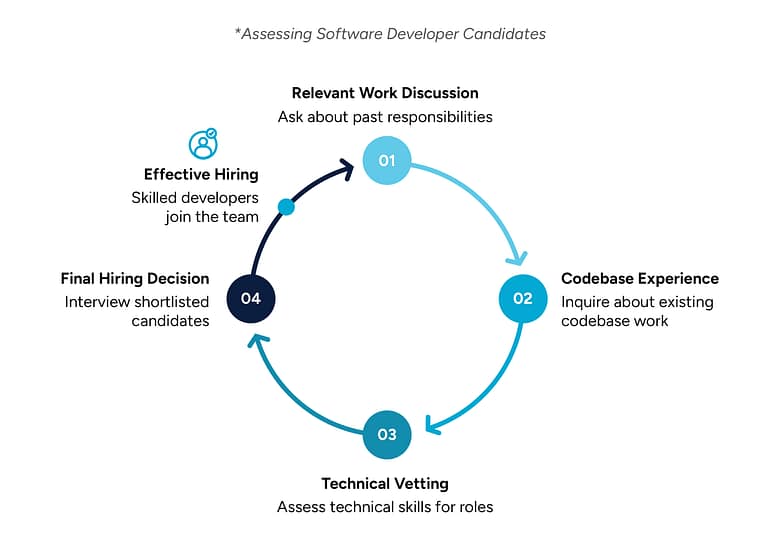
Four stages of assessing software developer candidates: discussing relevant work, reviewing codebase experience, technical vetting, and making the final hiring decision

Ask candidates about development work that's relevant to the role. Find out what they were responsible for and how they approached the work.

If they'll be joining an existing project, ask about their experience working with an existing codebase. For a more specialized role, the discussion can focus on the type of technical work they'll be doing for you.

LevelUp can include technical vetting for technical and specialist roles where appropriate. You'll interview the shortlisted candidates and make the final hiring decision.

For a broader look at the hiring process, read our guide to hiring dedicated offshore software developers.

How Will an Offshore Developer Work With Your Development Process?
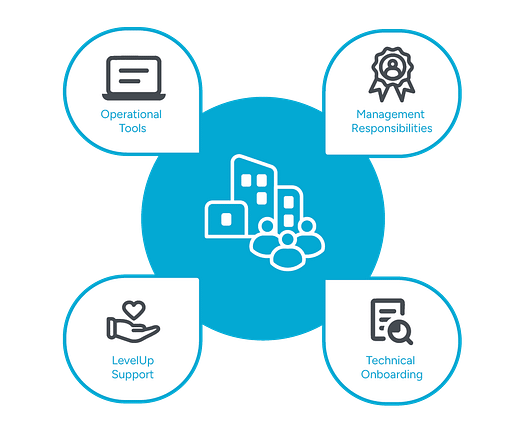
Diagram showing operational tools, management responsibilities, technical onboarding, and LevelUp support for an offshore developer

Your developer can use the same repositories, project management tools, communication tools, and development processes your team already uses.

You manage their development work and priorities. LevelUp handles their employment in the Philippines, including HR, payroll, compliance, and ongoing support.

Your team will handle the technical onboarding for your product and codebase. This can include giving them the access they need and showing them how your team handles development work.

Ready to level up your IT & Software Development team? 

With our 30-day money-back guarantee and no long-term contract, you can try our services risk-free.

Ready to LevelUp Your IT & Software Development Team?

Let's chat...

Frequently asked questions about Hiring an Offshore Software Developer

Can an offshore software developer work on an existing codebase?

Yes. They can join an existing project and work with your current codebase. They'll need time during onboarding to understand how it's structured and how your team works.


Can I hire a developer for a specific programming language or framework?

Yes. If a particular language or framework is important to the role, include it in the requirements from the start.

Can I hire one software developer, or do I need to build a development team?

You can hire one developer if that's what your business needs. The role should be based on the development work you need covered and how that person will work with the people already involved in your product or projects.


Is an offshore software developer the same as a freelancer?

No. A freelancer may work independently with several clients. With LevelUp, you hire a dedicated developer who works as part of your team.

Find talent, cut costs and scale

>